
A music major walks into an oyster farm…
Students from different disciplines did hands-on field work along the New England coast and discovered how conservation links policy, research and local communities.
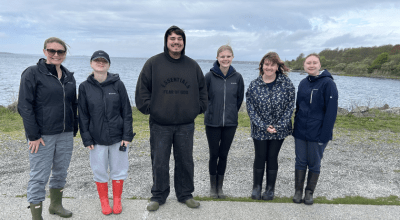
This May, Salve Regina University students traded classrooms for rocky shorelines, oyster farms, research vessels and coastal marshes, discovering firsthand why protecting New England's marine ecosystems matters.
As part of the Compass Summer program "Conserve Coastal New England," led by Dr. Christine Ramsay, assistant professor of biology, students explored the region's diverse coastal habitats through immersive field experiences that connected marine science, conservation, policy and community. From flipping rocks along the shoreline to touring aquaculture facilities and visiting world-renowned research institutions, every day offered a new perspective on the complex relationships between people and the coast.
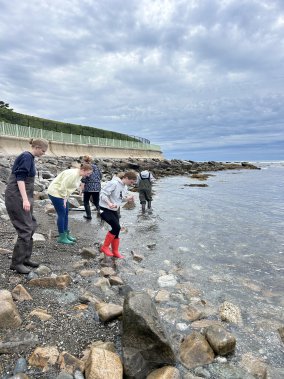
For many students, it was an opportunity to experience science beyond the classroom – and in some cases, beyond their own academic disciplines.
"I've always been interested in marine biology and the ocean and the sciences," said Dylan Harris '28, a political science and music double major with a concentration in international relations. "I'm not very good at science academically, but the interest is still there."
When Harris learned the program emphasized field experiences rather than traditional lectures and exams, he immediately signed up.
After introductory discussions on conservation strategies and coastal ecosystems, students spent the week exploring New England. They visited Mystic Aquarium, toured Woods Hole Oceanographic Institution on Cape Cod, traveled to Prudence Island to learn from conservation scientists and explored Rhode Island's thriving aquaculture industry.
Each destination offered a different lens on coastal conservation, exposing students to careers in research, education, government and environmental stewardship.
For Harris, Prudence Island left the strongest impression.
"There, I got to see the fieldwork that is done by the conservationists and scientists working with NOAA (the National Oceanic and Atmospheric Administration)," he said. "I also got to have a really good conversation about how politics plays a role in environmental protection."
As someone studying political science, Harris was fascinated by the intersection of public policy and environmental conservation.
"It really taught me to look at the tangible and daily impacts of policy," Harris shared. "So much of political science is looking at the theory and the overarching effects, but when I was at Prudence Island discussing conservation efforts, you could actually see where the money is going and how it's being used."
The experience reinforced something often difficult to appreciate in a traditional classroom, and demonstrated how environmental issues extend far beyond science alone.
"You learn about organizations like the EPA in political science," Harris said. "But actually seeing the animals, the environments and the habitats they're trying to protect really sets into perspective the tangible reasons those organizations exist."
For Katherine Olsen '28, a chemistry major who recently added an environmental studies minor, the program offered a chance to explore a field she hopes to pursue after graduation.
"I wanted to explore marine science, especially with Salve being right on the water," Olsen said. "This felt like a good way to get my toes wet."
In this program, no day was the same. One morning might begin exploring the rocky intertidal ecosystem below the Cliff Walk. Another day students boarded boats to tour an oyster farm in Matunuck, met scientists at Mystic Aquarium or caught the ferry to Prudence Island.
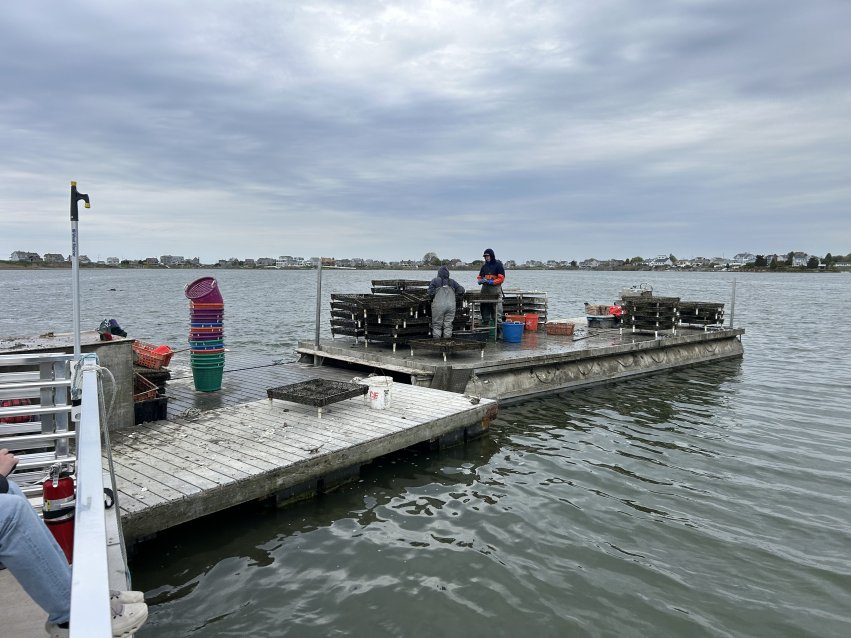
Along the way, students discovered that conservation often looks different than they expected.
"I thought the oyster farm was going to take up much more space, similar to an agricultural farm with lots of land," Olsen said. "But they do it in a very eco-conscious way. They lease only a small area, and they're very conscious about taking care of it."
Throughout the week, students learned about the growing challenges facing New England's coast, like warming waters, invasive species, sea-level rise and coastal erosion.
"The Gulf of Maine is warming 90 to 95% faster than almost any other ocean," she said. "That leads to invasive species moving farther north, affects oyster growth and impacts coastal communities."
The program also introduced students to the remarkable role horseshoe crabs play in modern medicine through work being done at Mystic Aquarium.
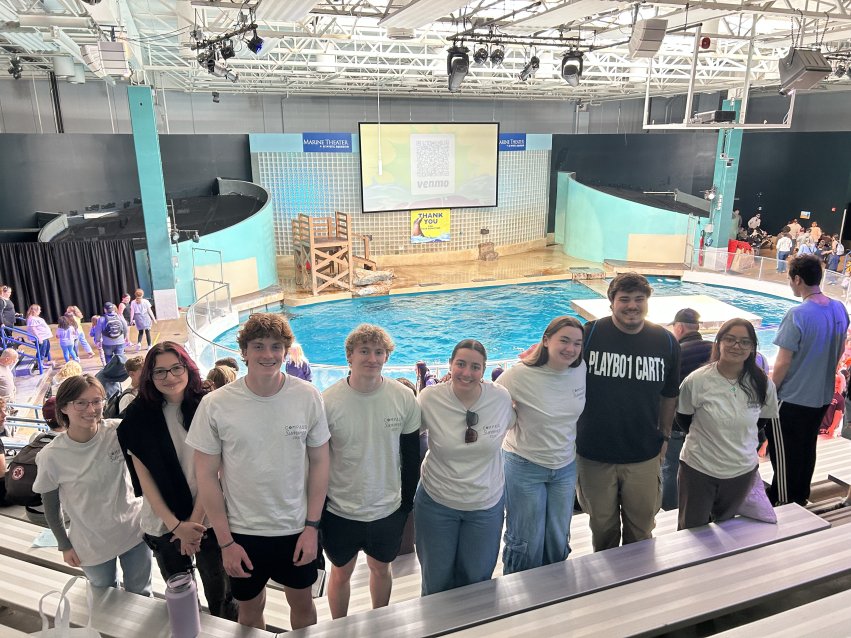
"Their blood is used to make sure vaccines and pharmaceutical drugs are safe," Olsen explained. "It was fascinating to learn how conservation and human health are connected."
Perhaps most importantly, both students said the program demonstrated that conservation isn't reserved only for scientists.
For Harris, the experience expanded his perspective on how his own career could contribute.
"I realized you need political science students and communicators working alongside scientists," he said. "Scientists are doing incredibly important work, but communicating why it matters is just as important."
The program also encouraged him to embrace curiosity in unfamiliar subjects.
"I never felt stupid for not knowing something," Harris said. "That's something I'm going to take with me. When I don't know something, I'm going to ask questions and learn from the experts."
Olsen found similar value in learning alongside students from different majors, united by a shared interest in protecting the environment. "We were all passionate about conserving our coastlines, even if we weren't all pursuing it as a career," she said.
She also came away with a reminder that meaningful conservation often begins with small actions.
"You don't have to be part of these huge projects to make a difference," Olsen said. "Even something as simple as using a reusable water bottle or reporting a tagged horseshoe crab helps scientists gather information. The small things matter too."
For students considering a future Compass Summer program, both offered similar advice: don't let your major hold you back.
"I would say it's actually better if you don't have expertise," Harris said. "If you have the interest, just go for it."
Olsen agreed.
"You have nothing to lose and everything to gain," she said. "It's a free opportunity to learn, meet people and experience something you might never have tried otherwise."
For students exploring New England's coast through Compass Summer, the week offered far more than a lesson in marine biology. It demonstrated how Salve's coastal location transforms the region itself into a living laboratory – one where experiential learning fosters curiosity, interdisciplinary thinking and a deeper understanding of the ecosystems that shape life in New England.