How reef balls and Christmas trees can help R.I. battle sea level rise and erosion
The Ocean State and other coastal areas are responding to rising seas by shifting to "living shorelines" that use natural substances, said Salve Regina University assistant professor Christine Ramsay.
By Edward Fitzpatrick, The Boston Globe
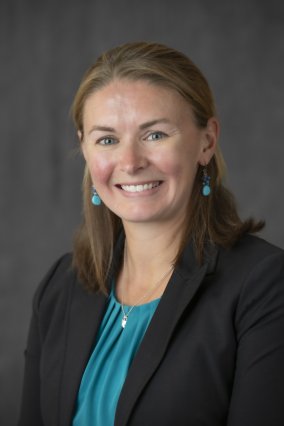
From Christmas trees to reef balls, the Ocean State has a variety of options for combating the impacts of climate change and rising sea levels, Salve Regina University assistant professor Dr. Christine Ramsay said.
Rhode Island is more dependent on the sea than most places, and it is being disproportionally affected by climate change and rising sea levels, Ramsay said on the Rhode Island Report podcast.
Ramsay, an assistant professor of biology and biomedical sciences, confirmed that the sea level off Rhode Island's coast is 5 inches higher than it was in 1956, with variations along the coastline.
The sea level is rising in part because of melting ice, she said. "We're seeing the glaciers melt at astonishing rates that we've never seen before, at least in our human lifetimes," she said.
The chemistry of water is another factor, Ramsay said. "Water at a molecular level is going to expand when you heat it up, and that ultimately is why we see water boil and evaporate into gas," she said. So when giant oceans heat up, that water expands, raising sea levels further, she said.
Faced with rising seas, humans could move away from the coast. But, Ramsay said, "It's hard to tell a whole bunch of Rhode Islanders who live on the coastline that you've got to retreat."
Recently, Rhode Island and other coastal states have responding to rising seas by shifting from hardened structures to "living shorelines" that rely on natural substances, Ramsay said. For example, she has done work on living shorelines that use Christmas trees to help protect, buffer, and rebuild the coastline, she said.
Artificial reef balls are another strategy used throughout the world, including in Narragansett Bay, Ramsay said.
Reef balls are made of a special concrete, forming a cylindrical half dome with lots of holes, she said. They are non-toxic and can provide a hard surface for seaweed or other natural organisms to return to while attracting larger organisms all the way up to the larger fish that are commercially important, she said.
"So if we can attract that type of community back, we're restoring some diversity that was there at one time," Ramsay said.
At the same time, reef balls help combat the impact of increased storm frequency and intensity by absorbing and dissipating some of that storm energy, she said.
In 2022, a 20-foot piece of Newport's beloved Cliff Walk collapsed into the ocean near the Salve Regina University campus.
Ramsay said that as a coastal ecologist, she often sees signs of coastal erosion. "I see it every time I'm walking the beach or walking along the salt marsh or at Salve," she said. "We're seeing the erosion of those different sites, whether it's the hard rock structure of the Cliff Walk or Easton's Beach just down the street."
She said dramatic moments such as the collapse of the Cliff Walk or Hurricane Sandy can wake people up to the impact of climate change and rising seas.
But climate change isn't just a long-term issue that will affect future generations, Ramsay said. "It's going to be, certainly, a problem for our kids and our kids' kids," she said. "But we're talking impacts in the next five, 10, 20 years that we're all going to face."
The Rhode Island Report podcast is produced by The Boston Globe Rhode Island with support from Salve Regina University. To get the latest episode each week, follow the Rhode Island Report podcast on Apple Podcasts, Spotify and other podcasting platforms, or listen here.