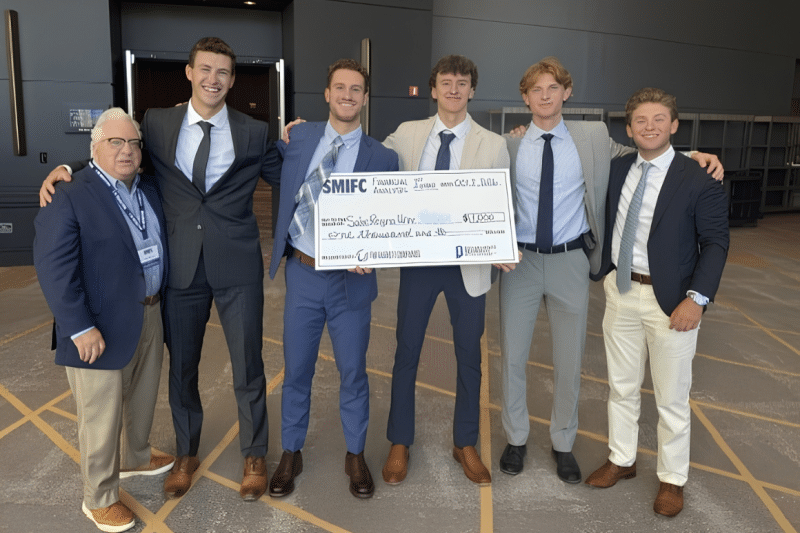

From classrooms to school leadership, Salve alumni are shaping education
Teachers of the Year Diane McBrier '91, '96 (M) and Kileen Gilroy '17 (M), along with principal Kate Gallahue '02, reflect on the Salve experiences behind their work.
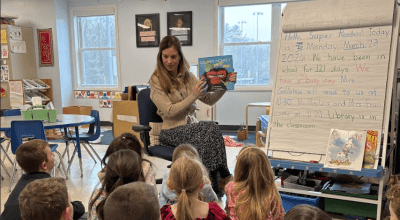
There is no single path to becoming an educator – and for three Salve Regina University alumni, no single definition of what leadership in education looks like.
Diane McBrier '91, '96 (M) found her calling teaching kindergarten, where she has built a career helping young students take their first steps in the classroom. Kate Gallahue '02 built a career in education after graduating from Salve with a business degree and is now stepping into her first full academic year as a principal. Kileen Gilroy '17 (M) came to Salve as a new teacher looking to not simply work within education, but to help change it.
Their journeys are different, but each points back to something they found at Salve: faculty who invested personally in their success, opportunities to turn learning into practice and an approach to leadership grounded in understanding the whole person.
Today, those lessons are playing out in their careers.
McBrier was recently named Teacher of the Year for Newport Public Schools in Newport, RI, while Gilroy earned the same recognition at Lincoln Middle School in Lincoln, RI. Gallahue, meanwhile, moved into the principal role at Canton Public Schools in Canton, MA, this summer after serving as interim principal last spring.
Together, they offer three distinct examples of what educational leadership can look like – and how a Salve education can help prepare graduates to lead from wherever they are.
Finding her place in kindergarten
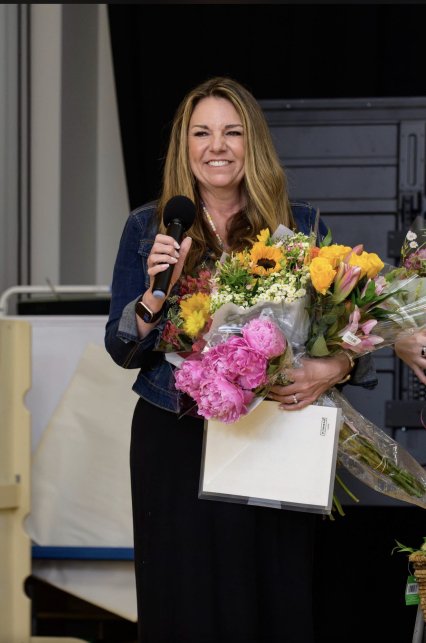
Education was not McBrier's first plan.
Growing up in Newport, she already knew Salve well. Her mother worked as director of financial aid, while her father, associate professor Tom Flanagan, served as vice president for administration and taught graduate courses at the University.
Still unsure of her own direction, McBrier explored several fields before her father encouraged her to take an introductory education course.
She loved it.
McBrier ultimately studied elementary education with a minor in special education before returning to Salve for a master's in education with a concentration in early childhood. Substitute teaching helped her discover where she belonged: with the youngest students.
"Kindergarten was where I was meant to be," she said.
One of the strongest influences on her development was professor emerita Dr. Juliette Relihan, who challenged future educators to reflect critically on their own practice. Students even videotaped themselves teaching and reviewed the lessons afterward – which was highly unusual at the time. For McBrier, the exercise was a bit uncomfortable, but she ultimately found it to be valuable preparation for a career that requires constant adjustment.
Relihan's investment did not end at graduation. She later contacted McBrier about an early-career teaching opportunity in West Greenwich and encouraged her to apply.
"She was always looking after her students," McBrier shared.
Decades later, that personal attention is still what McBrier associates with a Salve education.
She has hosted Salve student teachers in her classroom almost every year since 2002 – and takes student teachers solely from Salve. While she has watched the education program evolve to give students more classroom experience before student teaching, she said the close faculty support has remained consistent.
"Communication is huge, and I think Salve is really good at communicating and making sure that the students are successful," she said.
McBrier brings that same attention to relationships into her own kindergarten classroom. Before pushing curriculum, she focuses on routines, trust and learning who each child is.
Her classroom mantra is simple: "Practice makes progress."
She wants students to understand that mistakes are part of learning and that they should never give up on themselves. Sometimes, the impact becomes visible years later.
McBrier recalled a former student traveling from Providence to Newport more than a decade after leaving her classroom to tell McBrier she had received a four-year scholarship to Stanford University.
When McBrier asked why she had come all that way, the former student told her, "You believed in me. You encouraged me, and I wanted to thank you in person."
Moments like that have long shown McBrier the impact of her work. In 2026, that impact was recognized by her own school community when she was named Teacher of the Year.
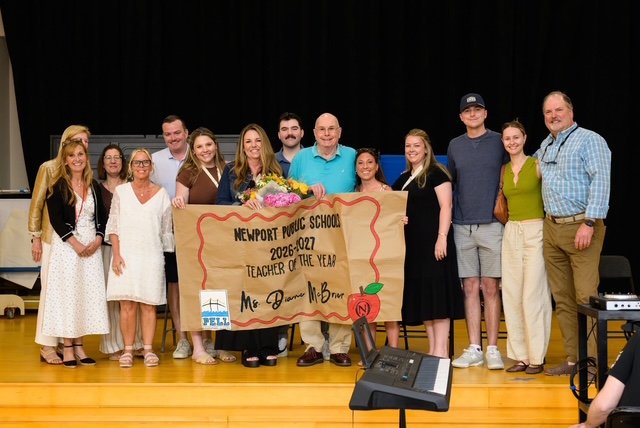
The honor was particularly meaningful for McBrier. Her father, now in his late 80s, still teaches at Salve, and she hoped the recognition would make him proud.
"If I got it, I wanted to get it for him, so this was a really special honor," she said.
Leading change from the classroom
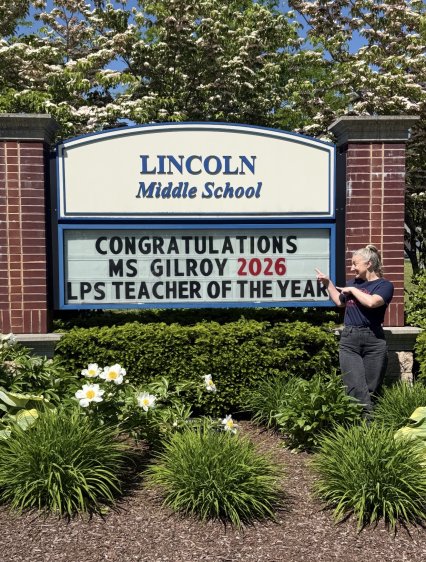
Gilroy arrived at Salve with a very different goal.
After earning an undergraduate degree in secondary education elsewhere, she began working at Lincoln Middle School and quickly saw both the potential of education and the systems she believed needed to change.
When she began researching graduate programs, she did not want another traditional education degree. She found what she was looking for in Salve’s holistic leadership program.
"I didn't want to pigeonhole myself to education," Gilroy said. Instead, she wanted to understand "changing systems from the inside out."
Under associate professor Dr. Nancy Gordon, Gilroy studied organizational change and a philosophy of leadership that challenged the idea that influence depends on holding the highest position in an organization.
"You don’t need to be president, you don't need to be a principal, you don't need to have an official title to be the change," Gilroy said.
For a new teacher, that was empowering.
"The parts make the whole," she said. "How you interact in those systems is so important."
Because Gilroy was beginning her teaching career while completing the program, she could immediately bring what she was learning at Salve into her classroom.
Mindfulness, movement and student empowerment became integral to her teaching. She introduced meditation practices and eventually founded Mindful Development, a nonprofit organization focused on professional development through mindful modalities.
This year, she is taking that work further with a $10,000 wellness grant from the Rhode Island Department of Education. The funding is supporting a new R.E.S.E.T. Room at Lincoln, designed for teacher wellness, restorative justice work with students and de-escalation before moments of crisis.
Gilroy credits Salve with giving her more than inspiration. The program gave her the research, language and confidence to support ideas she already felt strongly about.
It also reinforced an approach to education that combines rigor with compassion.
"I want them to feel like school is a safe place," Gilroy said of her students. "I want them to feel like they're going to learn something about life, something beyond the classroom."
At the same time, she expects students to meet high academic standards. Salve's holistic leadership program, she said, helped her reject the idea that education has to choose between the two.
"You can have both, and you can embrace the 'and' of things. Salve really taught me that you can have rigor while also having compassion."
When Gilroy was named Lincoln Middle School's Teacher of the Year, one part of the recognition stood out: She felt she had been recognized without having to change who she was.
"I've been true to myself. I've been true to my craft," she said. "To be acknowledged for just being myself was so special. I was enough in that moment."
Now, nearly a decade after her first Salve graduate experience, Gilroy has returned to pursue a graduate certificate in expressive and creative arts.
"If you're somebody who wants their work to apply to what they're doing, that's what Salve programs are all about," she said. "They help you apply what you're already doing while enhancing it as well."
From business student to principal
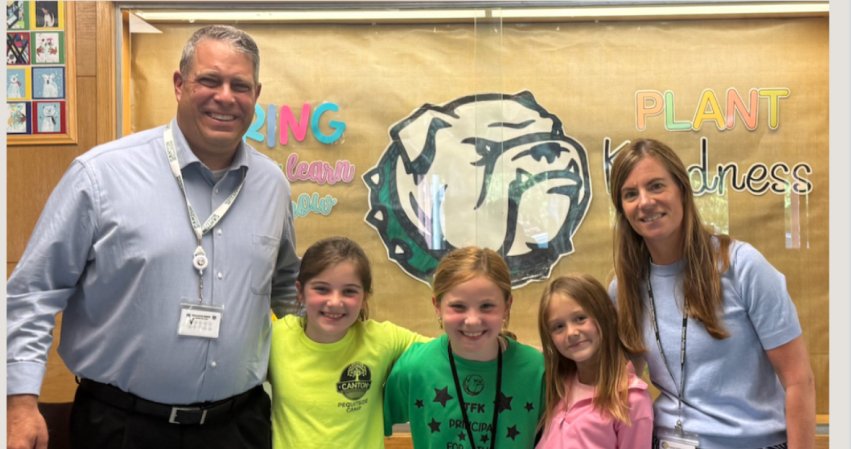
Gallahue's career may be the strongest reminder that preparation for educational leadership does not always begin in a classroom.
Recruited to play field hockey at Salve, Gallahue majored in business. After graduation, she began a career in sales – and quickly realized something was missing.
"I just wasn't getting what I was really wanting to do," she said. "Working with children."
She became a paraprofessional in Brookline, MA, earned a master's degree in moderate disabilities and education and progressed through teaching and special education roles. Leadership followed gradually: facilitator, team chair, assistant principal and now, principal.
Although her formal education training came later, Gallahue sees clear connections between the leader she is today and her undergraduate experience at Salve.
A senior business capstone, for example, required collaboration, shared responsibility and learning to work effectively with people she might not have naturally chosen as teammates.
"It wasn't just straight lecture," Gallahue said. "It was working with others, learning how to work with others."
She added, "Salve really allowed me to really grow independently and gain that leadership experience to be able to bring that into the world of education."
Now responsible for an entire school community, Gallahue emphasizes many of those same skills: collaboration, communication and understanding individual strengths and needs.
She makes a point of greeting students, being visible throughout the school and getting to know teachers beyond formal meetings. She also regularly seeks feedback from students, staff and families.
Her approach connects closely with another lesson she associates with Salve: compassion.
For Gallahue, that means understanding the whole student and recognizing that what a child needs to succeed may extend well beyond curriculum.
Looking back, she sees her undergraduate years as the beginning of a much longer process of discovering what she could contribute.
"Salve foundationally set me on that path to grow as a learner and to become the leader that I am today," Gallahue said.