Where history is buried, cultural and historic preservation majors dig deeper
While many archaeology students wait until graduate school for field research, Salve undergrads spend three weeks excavating active sites in New Hampshire and Maine alongside professional archaeologists.
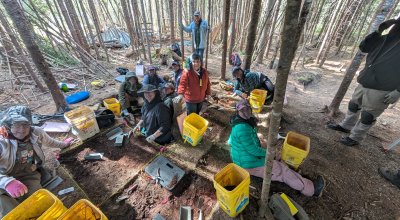
Most college students spend the month of May thinking about summer break. Cultural and historic preservation (CHP) majors at Salve Regina University spend it digging through centuries-old soil on frosty mornings, bathing in chilly lakes and living miles from the nearest cell tower.
Every other summer, Salve's archaeological field school gives undergraduate students the rare opportunity to participate in active research – an experience that, at many universities, students don't encounter until graduate school. Over three weeks, students traveled to excavation sites at Weirs Beach on New Hampshire's Lake Winnipesaukee and the remote North Maine Woods, where they learned archaeological methods firsthand while contributing to ongoing research alongside faculty and professional archaeologists.
The work was physically demanding and the days were long. But ask any student who has been, and they'll tell you the same thing: field school is one of the most rewarding experiences during their time at Salve. Amanda Lannon '27, Kit Guinivan '27 and Maddie Stair '29 reflect on the discoveries, friendships and lessons they unearthed along the way.
Amanda Lannon '27: Learning to lead in the field
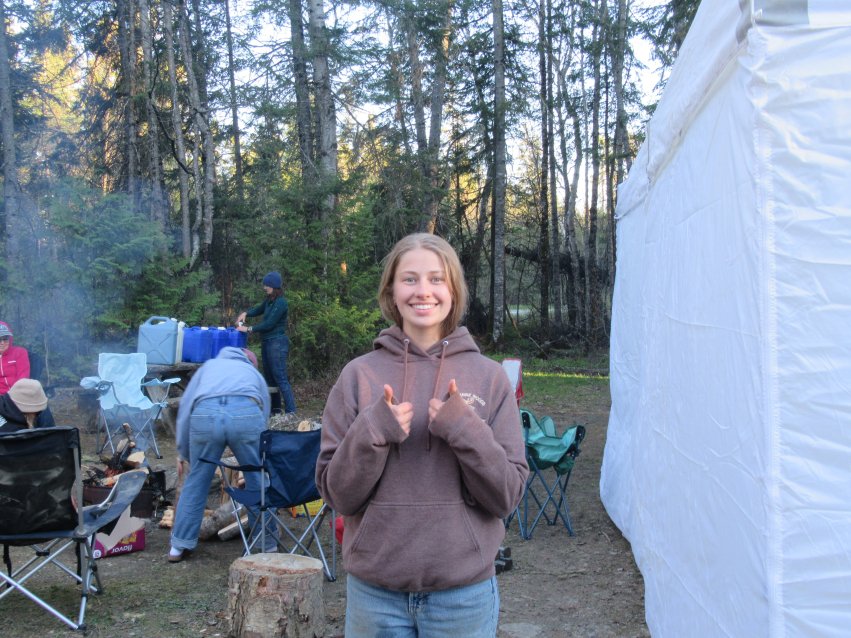
I attended field school for the first time in 2024 and was incredibly excited to return as field supervisor. This year I had more responsibilities surrounding paperwork and site management, so I didn't spend as much time digging, but I learned many skills of being a supervisor and how to manage both paperwork and the site.
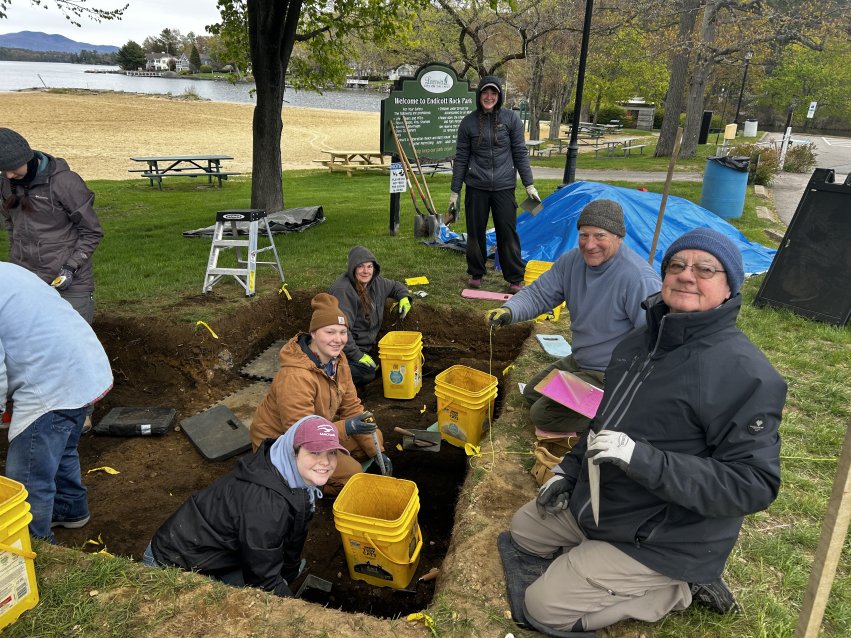
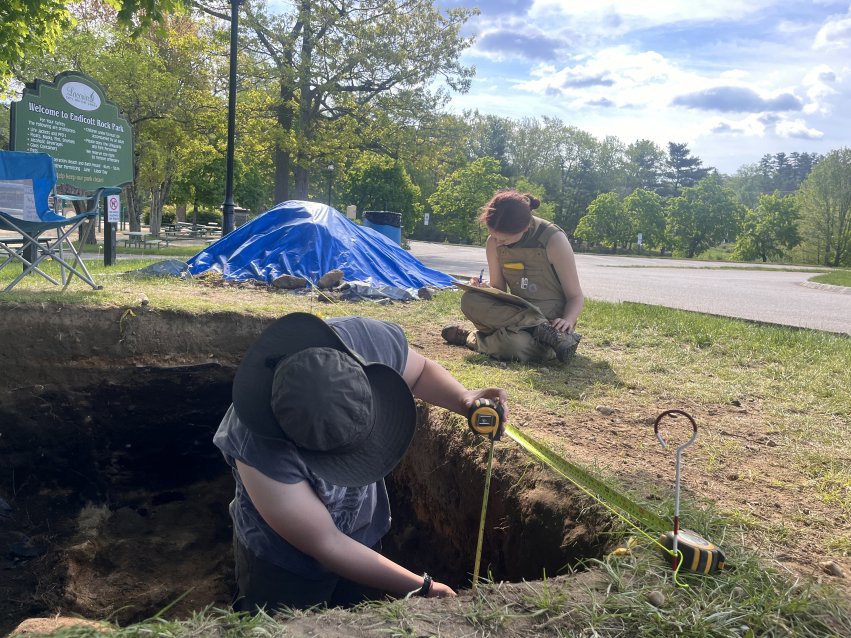
At Weirs Beach, our main interest was the lower layers, which could further our understanding of a Paleoindian site discovered in the 1970s. Our excavation unit was placed directly alongside the original dig, and our goal was to collect samples to radiocarbon-date the site with more accuracy than before.
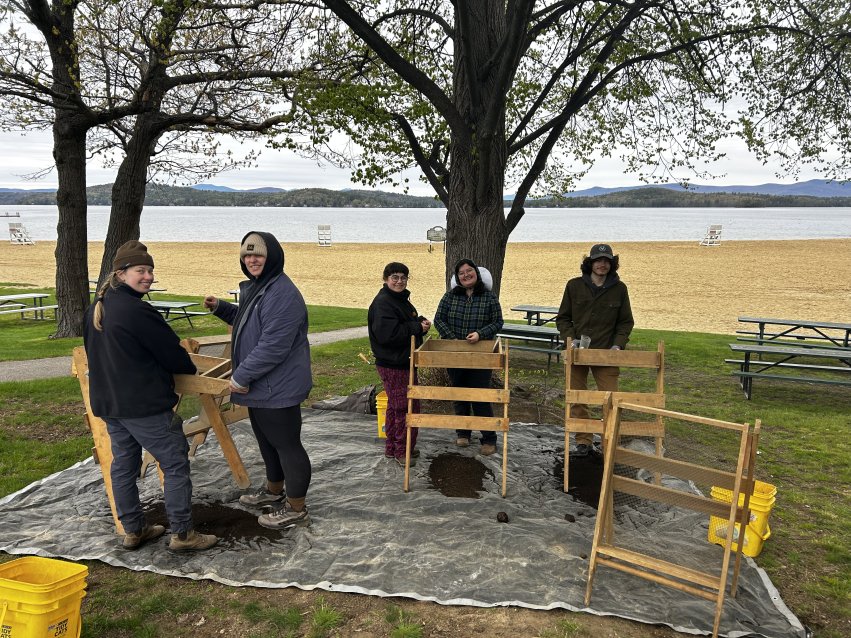
We found multiple projectile points from various time periods, but we were most interested in a round feature at the very bottom layers. It consisted of dark stained soil contrasting with the surrounding lighter sediment and could be evidence of a hearth containing burned organic material. We documented the hearth and took soil samples to carbon date.
When we got back to camp each evening, I was in charge of going through the artifact bags to make sure all the information was correct and that we had everything we needed for the next day. At Weirs, I often had to resupply artifact bags because we found so much material.
In Maine, we reopened a unit from last year's field school and expanded our excavation around where we had previously found artifacts with the most research potential, including a complete fluted point. This year we found multiple bifaces and a blade, and two nearby test pits produced numerous flakes and additional bifaces.
Life in Maine was very different. We lived in tents, collected drinking water from a natural spring and either bathed in the lake or used a shower tent. Every evening we gathered around the campfire, and I loved spending time there with my peers.
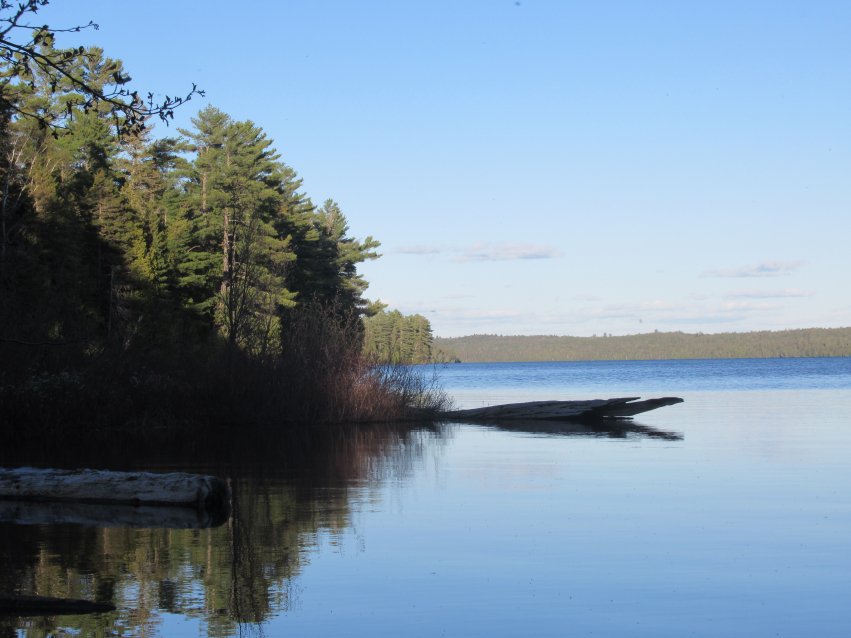
I have grown so much during field school, both this year and my first year. I enjoy working in the field because I get to learn through experience while still in my undergrad, and every day is an adventure.
Kit Guinivan '27: Living simply and learning by doing
The archaeological field school in Maine was a transformative experience for me. As a double major in cultural and historic preservation and environmental studies, it was the ideal intersection of my areas of study.
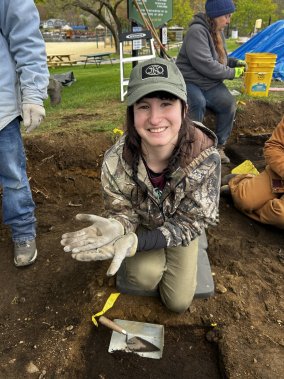
I was nervous yet excited before the trip. The outdoor education thrilled me, but I wasn't sure if I would be suitable for living off the grid.
I quickly settled into the rhythm of field life. The best way to ensure a productive day was to have a good morning routine: wake up, pack lunch, eat breakfast with the group, stretch and head to site.
I was frequently an excavator, digging out soil five centimeters at a time. I enjoyed being in the thick of it, getting my hands dirty and finding artifacts in their original position.
One of my favorite assignments was excavating a pit feature at Weirs Beach that appeared as a bowl-shaped black stain in light-colored sand. The process was tedious and lengthy, but we recovered several artifacts, including bifaces and a hammerstone. The artifacts and samples from that feature have high research potential.
In the North Maine Woods, I found a stunning biface made of banded Munsungun chert with colors of white, green and red. Shortly afterward, I uncovered a retouched flake that looked like a small saw because of its teeth-like edge.
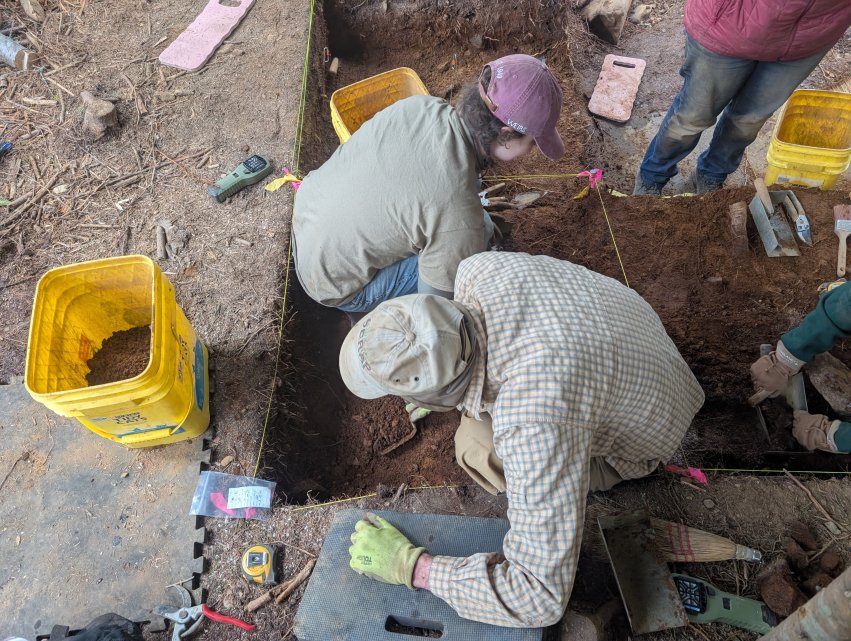
But field school taught me much more than excavation.
I learned how to cook, bathe and do laundry off the grid, how to light a campfire, how to chop wood and how to use what you have. As someone who studies sustainability, the experience opened my eyes to simple living and the importance of using – and needing – less.
It was also incredible to observe the rich ecosystem of the Maine woods. Even after taking ecology classes, I realized I could never stop learning about and absorbing nature.
Beyond everything I learned outside the classroom, the friendships I made will stay with me throughout my life. Cozy nights around the campfire, competitive card games, loon-calling lessons and makeshift crafts made me feel like a kid at summer camp who never wanted to leave.
Maddie Stair '29: Finding friends, confidence and a future
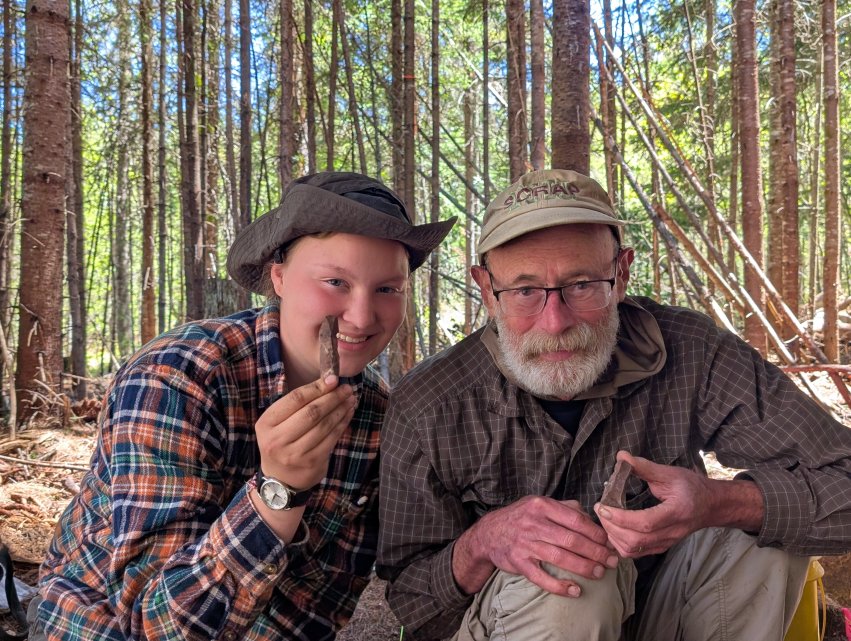
My experience at field school was a fantastic opportunity that set me up for future success and gave me hands-on experience that made me positive Salve was the right choice for me.
Going into the woods, I'd heard stories of incredible artifacts found, friendships formed, leeches, bug bites and intense Uno matches. At the start, I hardly knew anyone in our group of eight. By the end, I couldn't wait to return to campus to see some of my best friends again.
I had spent the year working in the archaeology lab processing historic artifacts, so prehistoric archaeology was uncharted territory for me. To the ordinary eye, many of the artifacts we found look like rocks. In reality, they're flakes chipped off raw material during the process of making stone tools.
One of the most exciting parts of field school was participating in two different excavations.
At Weirs Beach, we found prehistoric stone tools, most notably a bifurcate base. It was an astonishing find because it could point to earlier inhabitants than originally thought.
In the North Maine Woods, I had the opportunity to work alongside experienced archaeologists, including former New Hampshire state archaeologist Dr. Richard Boisvert. Working with experts like him helped me see a future in archaeology and opened my eyes to career opportunities.
Life at camp had its own traditions. We rotated cooking dinner and cleaning dishes, ended the day with lake baths and s'mores around the campfire.
But being off the grid changed more than our daily routine.
We relied on each other more, even for silly things like questions we'd usually look to Google for. If no one knew the answer, we had to live with the unknown. We even acted out internet memes when someone wasn't familiar with them.
Irregular at first, life unplugged was relaxing. If we got an email, it did not "find us well"; it didn't find us at all.
As a rising sophomore, I hope to return to the North Maine Woods as a junior in the role of field supervisor. I feel prepared to take on a more managerial role and help run an excavation thanks to this program.
If someone asked whether I'd recommend field school, I'd say yes without hesitation. Even if archaeology isn't what you see yourself doing for the rest of your life, a dig is rewarding in many ways – not to mention the epic forearm muscles.