
What Thanksgiving reveals about food insecurity in America
Dr. Victoria Gonzalez on Thanksgiving's complicated history, the often-overlooked faces of food insecurity and how social inequality shapes access to food.
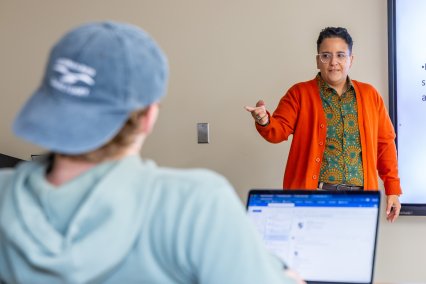
Growing up in a large Puerto Rican family, Dr. Victoria Gonzalez loved Thanksgiving. With her father's nine siblings gathering around the table, there was no shortage of company, tradition or food. Alongside the turkey were Puerto Rican dishes, and the abundance was an expression of love.
But as a sociologist, Gonzalez has come to view the holiday a little differently. A table full of food, she explains, doesn't necessarily mean the people sitting around it are food secure.
In 2024, 13.7% of American households – approximately 18.3 million – experienced food insecurity. Ahead of Thanksgiving, Gonzalez discusses the holiday's complicated legacy, the realities of hunger in seemingly affluent communities and why food insecurity is about far more than what’s on our plates.
Q: Thanksgiving is a holiday centered on abundance and togetherness. As a sociologist, how do you approach its history?
A: It was one of my favorite holidays growing up. I love the ritual of it, but then, as a sociologist, I learn about inequity in our history.
Thanksgiving is also known by other names, including the National Day of Mourning. We know about the Wampanoag people and the English colonists sharing a meal, but we don't always know about all of the other factors that were involved. There was an agreement that they made, but that agreement didn't last very long. It ended with the seizure of Indigenous lands and the violence of colonization.
Even here in Rhode Island, colonial authorities started to restrict activities like hunting, which made it difficult for Indigenous communities to feed themselves. Some of the laws we make and the policies we map out, we think we're doing for good reasons, but sometimes they adversely affect certain populations.
Q: Can someone sitting at a full Thanksgiving table still be experiencing food insecurity?
A: I was thinking back to my own childhood, knowing that people around the holidays in particular were always tight financially, and yet our Thanksgiving table was always full.
You see this beautiful Thanksgiving table, but maybe everybody at the table chipped in. Maybe somebody stretched their grocery budget that month.
I'm Puerto Rican, and culturally, I think for a lot of us, food is one of the ways that we show love. There's often a lot of pressure around the holidays to share and give as much as you possibly can.
But people are often dealing with lots of other challenges – paying rent, paying for childcare – and people's paychecks, especially these days, only go so far.
Q: How do age, race and socioeconomic status influence someone's experience with food insecurity?
A: It's really intersectional. In 2024, food insecurity affected 36.8% of families with children headed by women without a spouse present, compared to 23.8% of those headed by men without a spouse present. Among adults 65 and older living alone, that number was 11.3%.
When I think about children, I automatically think about school lunch programs. Sometimes the food that students get for free in schools is the only food they will get during the day until the evening. At the very fundamental level, it's about having enough food to have enough energy to actually do well during the day and focus on your grades. Being food insecure affects so much more than your meal.
The same thing is true for college students. Sometimes in higher education, we forget that there are people along different class and economic spectrums attending here. I've had students who couldn't afford meals sometimes, couldn't afford their books, and there are students here who are also very wealthy.
For older adults, there can be trouble even getting groceries or finding a reliable ride. It's not necessarily just about being able to afford food.
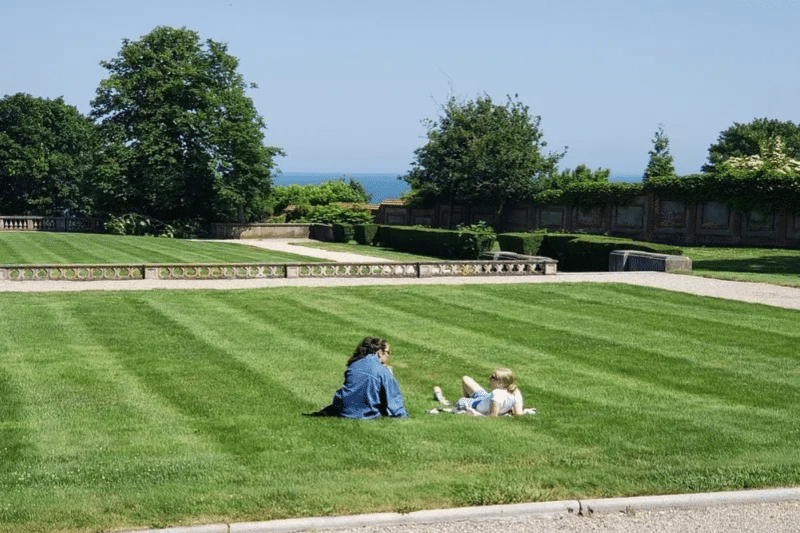
Q: Newport is often associated with wealth and historic mansions. How can that perception obscure the realities of food insecurity in our own community?
A: If you're only thinking about Newport as Salve, then you're not broadening your spectrum. Newport is really diverse. There are other areas that have distinct cultural differences, and it's important for us to realize that because there are people here who are, I believe, underserved and often underrepresented.
We're living in a densely populated but also expensive area to live in. There are faculty and staff who can't afford to live on Aquidneck Island.
According to the Rhode Island Community Food Bank's 2025 report, 58% of Hispanic or Latino households and 50% of Black households reported inadequate access to food, compared to 27.3% of white households.
There are also a lot of compounding factors involving structural racism that we need to include when we're assessing food insecurity and why it's particularly prevalent in certain areas.
Q: Why should we consider food insecurity a societal issue rather than an individual or household struggle?
A: I always advocate for my students to think about things with the mindset of the sociological imagination.
To look at an individual family and not consider the bigger sociocultural landscape in which they live is often a mistake. You can say that perhaps a person made some poor financial choices, but then you'd have to also consider the financial situation that they found themselves in generationally.
When I graduated from college, I graduated into a recession. My generation is also one that struggles with a significant amount of debt related to student loans. It's more expensive to own a home. It's more expensive to have a child.
Taking the perspective that it is just personal blame is really limiting the bigger picture. It's a perspective that's often, for lack of a better way of putting it, without mercy.
If we only had one family experiencing food insecurity on Aquidneck Island, then we'd be in a good place. But that one family is representative of so many other families. Instead of private blame, I think we need to look at it as a public or social problem.
Q: What can members of the Salve community do to make a difference?
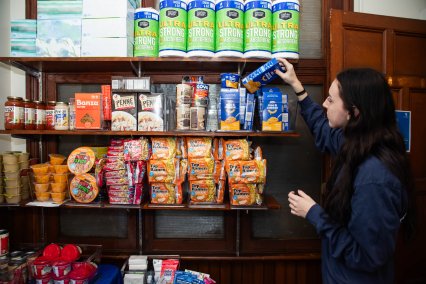
A: We can be more mindful of our food waste, support Catherine's Cupboard and have more conversations about the inequities that students, staff or faculty might be facing. There's often a silence around it that could be stigmatizing.
The MLK Community Center here in Newport is also a really important institution. I would advocate that people help their local food banks, wherever that might be.
It feels so good to work with a local institution when things out in the world feel so big. We're dealing with so many different national and international issues, and I think that we also have to remember that people right next to us also need help.
Q: As people gather around the Thanksgiving table this year, what would you encourage them to reflect on?
A: We love to celebrate the good stuff, and we love to have these big, lavish feasts because it's a sign of wealth and good fortune. And I do love the ritual.
But I think we need to be more mindful and thoughtful about what this holiday means to other people.
There's nothing wrong in my mind with sharing a meal with people that you love, but that meal could also just be grilled cheese and tomato soup. It doesn't have to be all of what we think of as the conventional Thanksgiving meal.
I think that we need to appreciate what we are able to have access to, and that the ability to afford it, for many, is a privilege.
Featured image by Getty Images/jenifoto