

Faculty Fellow Spotlight: Dr. Chad Raymond
From a small town in Maine to studying cultures around the world, Dr. Raymond reflects on curiosity, lifelong learning and the common ground that connects people.
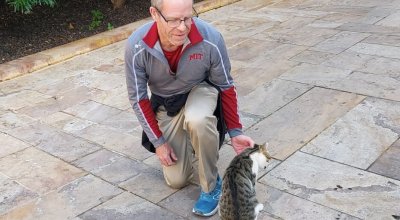
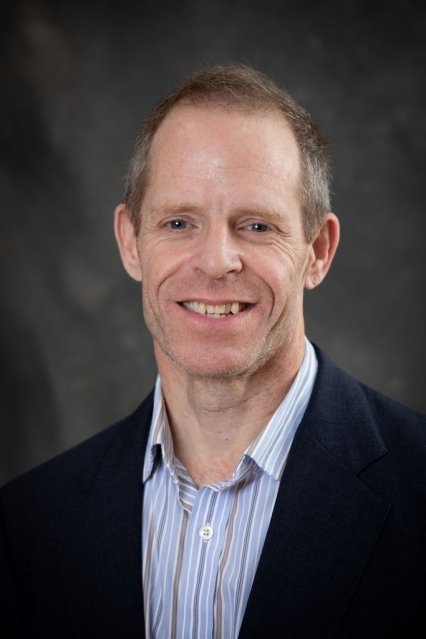
In this installment of The Pell Center Faculty Fellows Spotlight Series, Dr. Chad Raymond discusses how learning about cultural differences has shaped his life and research in comparative politics. A member of the Salve community since 2008, Raymond encourages students to look beyond cultural differences and consider what people from different backgrounds have in common.
Q: What is your role at Salve, and what are your areas of expertise?
I am professor of political science, associate director of the graduate program in international relations and chair of the Department of Political Science at Salve. My research and teaching focus on comparative politics, particularly economic development and its relationship to democratization. Geographically, my main areas of interest are Asia and the Middle East.
Q: What sparked your interest in the areas you study?
I grew up in a small town in Maine where everyone looked, acted, and thought the way I did. College was a very different environment. I began meeting people from other parts of the United States and from around the world, including places I had never heard of. Their life experiences were very different from mine, and I found that fascinating.
I became friends with these people and thought I should learn more about their lives. That was the starting point for everything that followed.
Q: Looking back on your own journey, what role has curiosity played in shaping your career?
I see myself as a living example of the benefits of curiosity and lifelong learning. I could have followed the path taken by many of the people I grew up with, but I kept asking questions and looking for opportunities to learn. My parents had not gone to college, and they never insisted that I must go. But they read for pleasure at home, and as a child I wanted to imitate the adults around me. That helped foster my love of reading and learning. I went to college, discovered I could earn a master’s degree in a fifth year, worked for a few years, and eventually realized that being in school was what I enjoyed most. I then enrolled in the political science doctoral program at the University of Hawai’i. There was no coherent long-term plan—just a series of happy accidents, made possible by continuing to learn throughout my life.
Q: How has teaching and researching about culture impacted you?
I used to be a stereotypical Northern New Englander, but that seems to have shifted because I’m married to an immigrant. My wife has even commented that I’m no longer the quiet, unemotional Mainer she married—I’ve started talking with my hands, which I never used to do. I think recognizing that people’s behaviors are shaped by their cultural backgrounds is one way to make an intercultural relationship work more smoothly. If I assumed my wife’s behavior had the same causese that would motivate me to act that way, it would be a disaster. Instead, I have to pause and recognize that her responses may reflect how she was socialized.
Q: What questions in your field are keeping you curious?
A major topic in comparative politics is what has caused the democratic decline seen in many countries over the past 10 to 20 years, including countries with well-established democracies. Even in the United Kingdom and the United States, democracy seems to be in real trouble. I’ve been very interested in reading what other scholars have been thinking about this.
An important unanswered question is whether declining trust in government is a cause or an effect of democratic backsliding. Some scholars argue that candidates in democracies have an incentive to disparage existing democratic institutions. People may already have some distrust of or dissatisfaction with the system of government, and that message can amplify those feelings.
Q: What do you hope students take away from these ideas?
In my undergraduate courses, I try to put myself in the position my students are in. Many are encountering cultures and histories that are new to them, and much of the information they receive through mass media has an American focus. I encourage them to look beyond surface-level differences and consider the similarities among people who have very different cultures and histories. My view is that people are not as different as they might seem, and that they often have good, or at least logical, reasons for behaving as they do.
Q: What are you especially proud of in your work at Salve?
One of the greatest joys of teaching is seeing students with a sense of adventure and curiosity go out into the world and make a difference. For example, two former students come to mind: one studied coastal resource management in Tanzania and the other volunteered as a teacher at a school in Chile serving children from a socioeconomically disadvantaged community. They immersed themselves in unfamiliar communities and had experiences that I’m sure will continue to benefit them throughout their lives.
Q: What is one book you’ve read recently that has sparked your interest?
Stephen King’s novels have had a great impact on my life. My wife recently read my copy of his novel, Thinner, which describes Maine and the era I grew up in, along with some dark commentary on American culture. She enjoyed it so much that I decided to reread it. At its heart, I think the novel explores agency and taking responsibility for one’s actions—something that seems to have declined in American culture.