The role of first lady has evolved to become "quite active in policymaking," Salve Regina University professor says
With the Melania Trump film focusing attention on her role at the White House, Dr. Mary Anderson talks about first ladies through history, from Mary Washington to Jill Biden.
By Edward Fitzpatrick, The Boston Globe
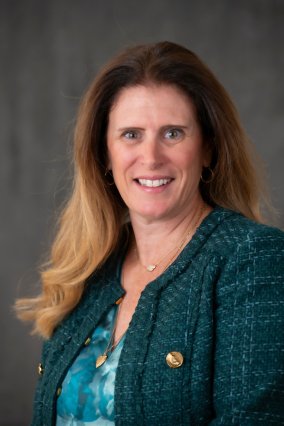
As the new Melania Trump documentary focuses attention on America's first ladies, Salve Regina University professor Dr. Mary Anderson is writing a book that traces the evolution of the first lady's role.
In years past, the first lady served in a strictly ceremonial role, acting as a social hostess and "sort of the poster of American womanhood," Anderson said on the Rhode Island Report podcast.
But more recently, she said, "It has evolved into a role where they are really quite active in policymaking, much more than we would think." And some first ladies are "really crafty – in a good way – at weaving that into some of those more traditional types of roles that seem to play well with the public because of gender norms around the first lady," she said.
For a November 2024 article, Anderson and Jonathan Lewallen examined the public speeches and remarks that first ladies Hillary Clinton, Laura Bush, Michelle Obama, Melania Trump, and Jill Biden delivered between 1993 and 2022. And they found that first ladies often engage in a ceremonial role and a policy role at the same time.
"We found that, for example, when a first lady is giving a commencement speech, that would be a ceremonial role, but in that speech she might also talk about policy," Anderson said.
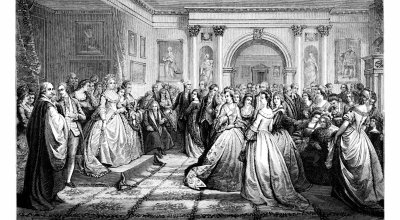
America's first first lady, Martha Washington, saw the role as supporting her husband and serving as a "social hostess bringing people together," she said.
Eleanor Roosevelt, who served as first lady from 1933 to 1945, was ahead of her time in getting involved in policy matters in that role, Anderson said, but after her, the role reverted to a more traditional ceremonial position for decades.
When Bill Clinton was elected president in 1992, Hillary Clinton had served as first lady of Arkansas, focusing on children's health. On the campaign trail, the Clintons were promoting the idea of getting "two for the price of one," Anderson said.
"But when Hillary started tackling universal health care, that really set up a lot of blowback," she said.
Rosalynn Carter, who served as first lady from 1977 to 1981, had also received criticism for getting involved with policy matters during her husband's presidency, Anderson said. But what differed with the criticism of Hillary Clinton was the media landscape, which had shifted to include 24-hour cable news, and the political atmosphere, which had become more polarized and adversarial, she said.
While Hillary Clinton was the most policy-oriented among recent first ladies, Laura Bush also focused on policy matters, Anderson said, during her years as first lady from 2001 to 2009.
"We tend to think of Laura Bush as a very traditional first lady," she said. "But she was not, and she did a lot, particularly around girls and women related to the war in Afghanistan."
In the 2020 Netflix documentary "Becoming", Michelle Obama talked about the intense scrutiny and loss of personal privacy that first ladies experience.
Anderson said Michelle Obama was in "the double bind" of not only being a woman in politics, but being the first woman of color to serve as first lady, from 2009 to 2017. "So she really had to walk a tightrope," she said, saying the Obamas faced pressure to be "better than perfect" because there was so much focus on them.
While other first ladies have had successful careers, Jill Biden was the first to continue her professional career outside the White House. She was an English and writing professor at Northern Virginia Community College while serving as first lady from 2021 to 2025.
"So she really redefined the role," Anderson said. "Whether other first ladies will continue to do that, I don't know."
Anderson, the Brodsky Chair of US Constitutional Democracy and Culture, also talked about the prospects of having a first gentleman and electing a woman as president for the first time. She said research shows that when women run for office, they are as likely to win as men, but they are less likely to run in the first place.
Some of it hinges on confidence, Anderson said. "Women have to feel like they’re ready to run," she said. "They're very strategic. There has to be a window of opportunity." Also, the toxicity around politics these days turn some women off, she said.
Anderson said Rhode Island ranks 10th in electing women to the state Legislature, with women accounting for 42.5 percent of the General Assembly.
But Rhode Island has elected only one woman to Congress, Claudine Schneider, a Republican who represented the state's Second Congressional District between 1981 and 1991. Democrat Gina M. Raimondo became the state's first female governor when she was elected in 2014.
"We need to do better at recruiting (women) and supporting them when they do choose to run," Anderson said. "We can build spaces that cultivate confidence and experiences for young women. What we have found in our research is that egalitarian families and having a robust support network are really important to giving women the confidence to run."
The Rhode Island Report podcast is produced by The Boston Globe Rhode Island with support from Salve Regina University. To get the latest episode each week, follow the Rhode Island Report podcast on Apple Podcasts, Spotify, and other podcasting platforms, or listen here.
Feature image by Getty Images/Christine_Kohler