
As Olympic athletes prepare to compete, politics will also be at play
On the Boston Globe's Rhode Island Report podcast, Salve Regina University’s Erin Redihan talks about Russia’s ban, the history of doping, the presence of ICE, and Lindsey Vonn.
By Edward Fitzpatrick, The Boston Globe

With the opening ceremonies of the 2026 Winter Olympics set for Friday, attention will focus not just on individual competition and medal contention, but also on political tensions and international relations.
Erin Redihan, a lecturer in the history department at Salve Regina University, teaches a course titled “Politics and The Olympics.” Redihan delved into those topics on the Rhode Island Report podcast.
Redihan, who studies the history of the Soviet Union and the Cold War, noted that Russia is banned from participating as a nation in the XXVth Winter Games in Milan and Cortina, Italy.
Russia invaded Ukraine just days after the close of the 2022 Winter Olympics in Beijing, China, she noted, and the International Olympic Committee banned Russia and Belarus from this year’s games.
“A lot of athletes in the IOC member nations expressed discomfort with having Russian athletes there competing under a Russian flag, given what Russia is doing to one of its neighbors right now,” Redihan said. But 13 athletes from Russia will be allowed to compete as individual neutral athletes, she said.
The lack of a big Russian contingent will benefit European teams, including those from Norway, Sweden, and Finland, and it will be particularly noticeable in figure skating competitions, where Russians often excel, Redihan said. She noted Russian figure skater Kamila Valieva, 19, will not compete in Milan-Cortina following a four-year doping ban for a positive 2022 test.
Redihan has her students read a book titled “Drug Games: The International Olympic Committee and the Politics of Doping, 1960-2008.”
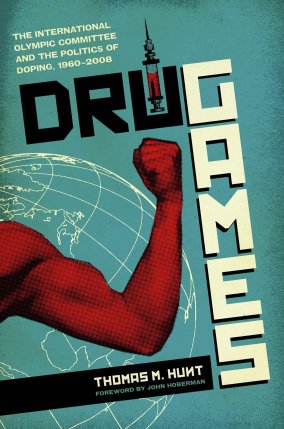
Doping is a longstanding problem in the Olympics, she said, tracing it back to the first doping-related death of a cyclist in the 1960 Rome Olympics.
The World Anti Doping Agency didn’t start until 2000. “So in the intervening 40 years, doping was fairly prevalent,” Redihan said. “Not every athlete, of course, not every sport.” But she said doping was prevalent among the Soviet Union and its satellite states.
While Russia is banned this year, some called for excluding the United States and its athletes from the Olympics over the recent military intervention in Venezuela.
But the International Olympic Committee allows countries to participate as long as they are in good standing with the IOC, “and technically speaking, the United States is in good standing with the IOC,” Redihan said.
“The IOC’s party line is essentially that the IOC doesn’t play politics,” she said. “Russia’s ban is really kind of an extreme case in terms of IOC history.”
Over the years, the Olympics provided a venue for Cold War competition, Redihan said.
“Winning Olympic medals is exciting. It brings national pride. It’s something tangible,” she said. “People don’t understand the logistics of sending rockets to the moon,” but “everyone can watch the hockey team and cheer.”
News that a unit of US Immigration and Customs Enforcement would be present during this Winter Games prompted protests in Italy. Milan’s mayor called ICE “a militia that kills” and said it’s not welcome in his city.
Redihan said it still looks like ICE will be present at the Olympics “in a fairly limited capacity.”
“They have been present at past Olympics,” she said. “What’s standing out right now, of course, is everything that’s happening in Minneapolis and in and in other cities. That’s bringing politics into the Olympics, and so the IOC president, Kirsty Coventry, was asked about this, and she basically said: We really wish they weren’t bringing politics into it.”
Aside from political issues, Redihan said she will be keeping an eye on storylines, such as the performance of American downhill skier Lindsey Vonn, who just revealed that she ruptured the anterior cruciate ligament in her left knee during a crash last week.
“It’s really cool to see someone who has succeeded in the Olympics, walked away, and then to come back and stage a comeback in such a high profile way,” she said. “She’s still hoping to compete, and I think it’d be a really nice story to see her there.”
The Rhode Island Report podcast is produced by The Boston Globe Rhode Island with support from Salve Regina University. To get the latest episode each week, follow the Rhode Island Report podcast on Apple Podcasts, Spotify, and other podcasting platforms, or listen here.
Feature Image by Getty Images/Aliaksandr Antanovich