

With more than 800 students and 20+ offerings, Salve’s rec sports scene is growing fast
From rugby to eSports, Salve’s recreational and club sports program gives students a place to play – and to belong.
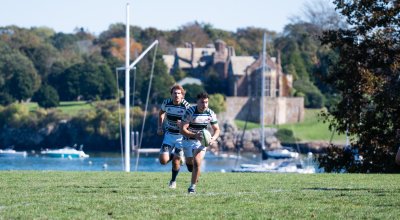
On a campus where Division III athletics is only one lane for staying active, Salve Regina University’s recreation and club sports program has become a home for students who want the competition and camaraderie that sports can bring without the full-time commitment.
“I’m a huge fan of the club sport model, because it allows them to continue what was part of their identity, but not be their entire identity,” said Pam Heroux, Salve’s director of recreation. “Everybody gets a chance.”
When Heroux first started as the director of recreation in 2024, the opportunities for students who weren’t varsity athletes were limited. There were essentially four programs in the mix: cheer, men’s and women’s rugby, and a fledgling swim club that Heroux helped bring to life after noticing how many incoming students had athletic identities that didn’t have a place to land on campus.
From there, the program began to expand – not just in size, but in what “rec sports” could mean at a small university. Today, it’s not only long-standing teams like rugby and newer competitive clubs like volleyball and golf, but also the kinds of lower-barrier, student-driven options that make it easier to try something new: like ping pong, pickleball and the ever-popular Outdoor Adventure Club, where students can sign up for weekend trips and activities without committing to a full season.
“Recreation is like a house,” she said. “Under it, the foundation has seven different sections: club sports, recreational organizations, intramurals, excursions and events, fitness classes, our bike program and eSports program.”
That flexible model – competitive when students want it, casual when they don’t – has helped Salve go from a handful of opportunities to something much bigger. Heroux estimates there are now more than 800 students involved across over 20 recreation and club sport offerings, with new groups continuing to emerge as students bring forward ideas, interest builds, and the program helps provide structure, support and identity.
For some students, rec sports are a way to find purpose, confidence and leadership through the highs and lows of competition.
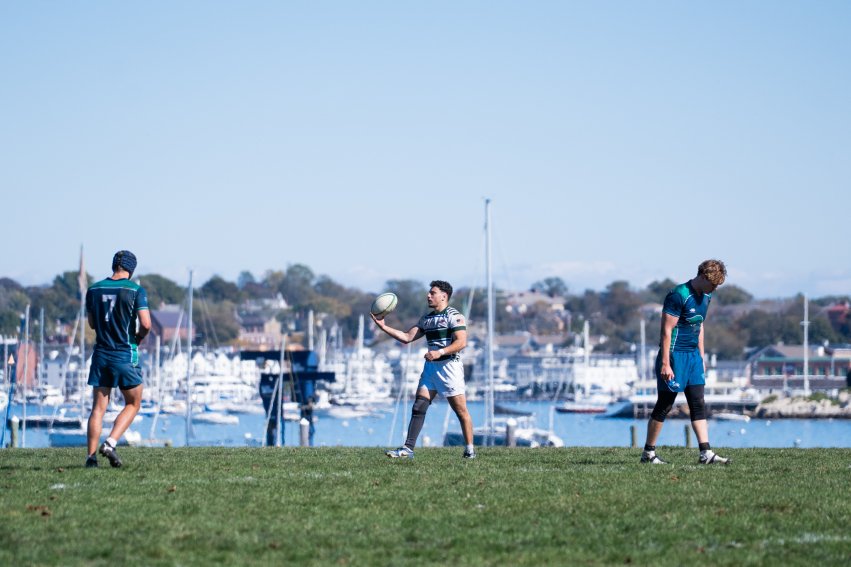
Business administration major Joe Palazzo ’26 said he joined men’s rugby after his roommate “dragged me out to try a practice,” and he “immediately fell in love” with the sport, the team and the coaches. One game still stands out: a tight matchup against Trinity College that came down to the final minute.
“I was mentally and physically drained after 79 minutes of such a close game,” Palazzo said. “That’s when I realized that I had one more minute to play my heart out, not for me, but for the person next to me.”
He credits the experience with helping him build skills that translate beyond the field.
“Leadership, teamwork, communication and grit are all key aspects that I have strengthened and will take into my career path,” he said.
Building something new – and watching it grow
For other students, the growth of rec sports is something they’ve helped create from scratch.
Charlotte Boatright ’28, president and founder of the Salve gymnastics team, arrived on campus after more than a decade in competitive gymnastics, and quickly realized the sport she loved wasn’t one she wanted to give up yet.
Boatright remembers the nerves of launching something new, and the moment she realized the club could become real.
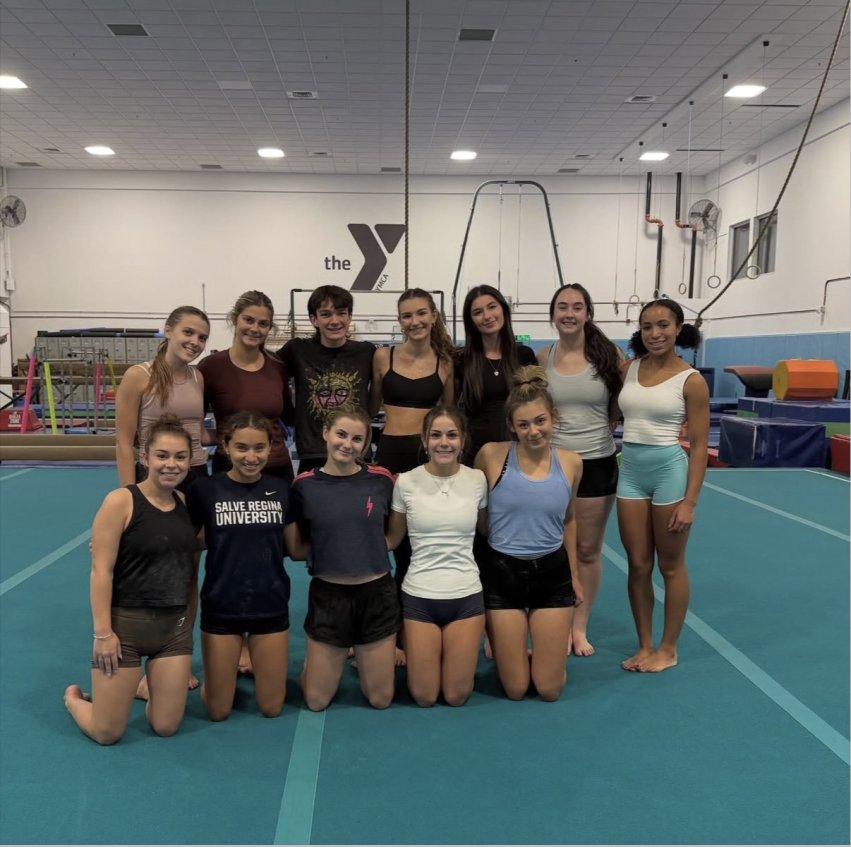
“One of the most memorable moments was hosting our very first interest meeting,” she said. “I was nervous that no one would show up, but over 30 people came.”
Now, the club has “16 official members of all different skill levels,” creating a place where students can keep training or try gymnastics for the first time.
Beyond practices, Boatright has watched the team become a support system and a bridge into the community, including service moments like making “good luck ducks” for young gymnasts at the local YMCA.
“It’s small moments like that that remind me how much impact this club has had on others,” she said. “More than anything, it’s made Salve feel like home.”
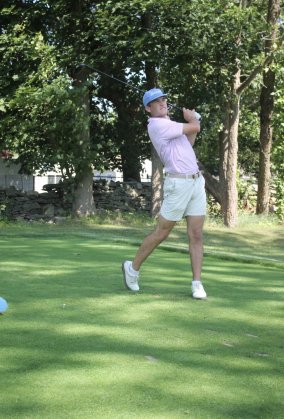
Jack McMullen ’26, a finance major, captain of the men’s basketball team and a top competitor in club golf, said it gave him something he didn’t expect to be able to do in college: keep playing multiple sports.
“One of the best parts about rec sports is that it allows me to play on the [NCAA DIII] basketball team at Salve while also competing in club golf when I can,” he said. “Having the opportunity to stay involved in both sports has been such a great experience for me.”
He added, “It has given me lifelong friendships, unforgettable memories and a true sense of family and belonging on campus. I truly believe it has enhanced my overall college experience.”
Beyond traditional team sports
For Heroux, it was important to expand the definition of what rec sports could be.
ESports, she said, has become one of the most meaningful examples of what the program can offer.
"This one warms my heart," Heroux shared, describing how she first met student leader Julianna Anderson ’26 when Anderson was still in high school. "Now the eSports space is a catch-all for students, and it feels so special to have gotten to watch Jules find her people, and offer that same environment to others."
Anderson, who is the unofficial president of the eSports teams and captain of the Overwatch team, said stepping into that leadership role has been one of the most rewarding parts of her Salve experience.
"Bringing my Overwatch team to our first match, with it being a resounding victory, was extremely rewarding," she said. "I was and still am so proud of them and remain their biggest cheerleader."
For Anderson, the meaning is also bigger than one season.
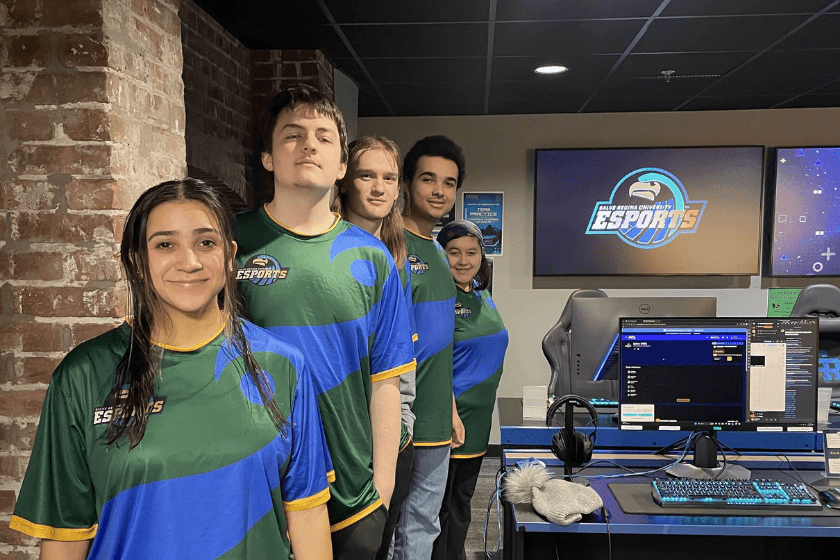
“Knowing that I will be leaving my mark on the University in the form of reviving the eSports program is something I am beyond happy with,” she said. “Knowing that I will be able to provide this space for others in the future makes me emotional.”
Play, compete, connect
For Heroux, the growth of rec sports isn’t just about adding teams; it’s about making sure students can still have that sense of identity and connection that sports can give, without the commitment or skill level required of a DIII varsity program.
“Being a part of rec sports made my overall college experience feel easier,” Palazzo said. “Not only did it feel like an escape away from busy classes and work, but it also built a foundation that I was able to translate back into school and my network. My only regret is that I did not join sooner.”
Even as the program continues to grow, Salve’s rec sports teams are already competing on a stage that might surprise people. Club teams regularly face off against schools like UCONN, Brown, Yale and Providence College. The scope of what Salve offers is unusually robust for a university of its size, with everything from competitive club teams to outdoor adventures and casual intramurals all under one roof.
It’s a model that blends ambition with accessibility, demonstrating that at Salve, recreation isn’t just an extra activity, but a defining part of the student experience.