Faculty Fellow Spotlight: Dr. Bill Leeman
Leeman reflects on how his experiences stepping into the past have brought history alive for him, and how he hopes he can create those opportunities for students at Salve.
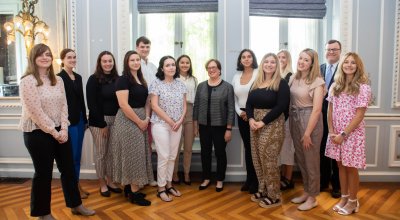
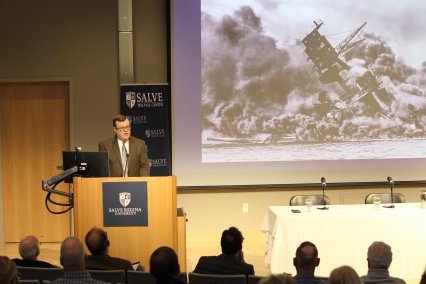
In this installment of The Pell Center Faculty Fellows Spotlight Series, Dr. Bill Leeman discusses his ongoing research on the military powers of America's early presidents, with a specific lens on how those powers interact with political systems. Leeman is a professor in the department of history and the director of the Pell Honors Program. A member of the Salve community for 15 years, he encourages his students to step into the past to make history truly come alive.
Q: What is your role at Salve, and what are your areas of expertise?
A: I'm a professor of history and the director of the Pell Honors Program here at Salve. My main areas of interest are American political and military history. I regularly teach courses on the American Revolution, the Civil War, the American presidency, the Great Depression and World War II, the Vietnam War and an American military history survey course. My research is focused on the interaction between American political and military institutions, as well as the interaction between the U.S. military and American society and culture more broadly.
Q: What sparked your interest in pursuing the interaction between political and military institutions?
A: Both of my parents were teachers, and I grew up in a family that was very much in favor of our vacations being educational. An important spark, although I was very young when it happened, was a trip to Washington, D.C. when I was five years old. We visited all the famous monuments, went on a tour of the White House and visited George Washington’s Mount Vernon estate. Ever since then, I’ve been fascinated by history, and particularly American presidents. When I was studying history in school, I had already been to a lot of the historical sites we learned about, so that naturally made it more interesting for me, because I had experienced it.
When I was studying history in school, I had already been to a lot of the historical sites we learned about, so that naturally made it more interesting for me, because I had experienced it.
Q: What questions are you hoping to analyze during your upcoming sabbatical?
A: I'll be working on my current book project, which is a study of the early presidents and how they exercised their military authority in relation to Congress, to better understand that dynamic within the bounds of the separation of powers. I want to go back to the beginning, to talk about what the framers of the Constitution originally intended for war powers, particularly the war powers of the president. A lot of times, presidential scholars point to the presidents of the 20th century as the presidents that expanded the power of the presidency beyond the intentions of the framers, but my research asserts that presidents far earlier started pushing back against the framers’ more limited vision of presidential power.
Q: Is there an experience that has been particularly memorable for you throughout your time at Salve?
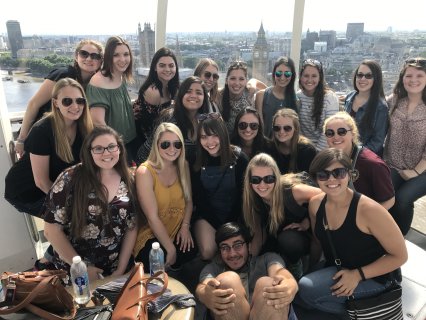
A: First, I think about the opportunity I had to teach in the short-term study abroad program based in Oxford, England. That was my first time going abroad, so it was an incredibly memorable experience. I got to teach a course on Anglo-American relations since the American Revolution, and it was great to be able to see the students learning something in the classroom but then getting to go on field trips and experience their learning first-hand.
The other experience that comes to mind was the opportunity to develop a university seminar course called “From the Earth to the Moon,” which was about the history of the U.S. space program, focusing on the moon race between the United States and the Soviet Union in the 1960s. In a lot of ways, my students didn’t have any background with the history of space exploration, because they grew up during a time when the United States didn't have a very active space program. Since I was a little kid, I've always been fascinated by space exploration, and this was a tremendous opportunity for me to share my passion about that with students.
Q: Are there any ways that you connect with your community through teaching and research?
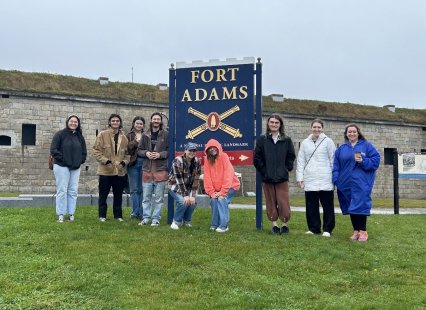
A: I really like seeing my students pursuing their interests and talents outside the classroom, so I attend a lot of student sporting events, theater performances and concerts. I was the faculty mentor for the men's ice hockey team and the faculty advisor for the history club for several years. I also think one of the things that's great about teaching in Newport is having students experience the history that's around them in this historic city. I've brought students to the Colony House, Touro Synagogue, the Redwood Library, The Breakers, Marble House and Fort Adams. I like to make sure that Salve students get first-hand experience with Newport's history, because just like I experienced growing up, all those historical sites and museums made history come alive for me.
Q: What's something you hope to gain from your work as a faculty fellow?
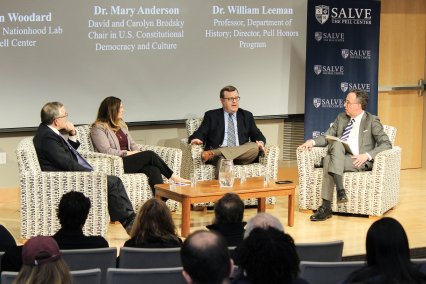
A: It's a great opportunity to share my research and the scholarly interests I have with our campus community and beyond. I also see being a faculty fellow as a chance to get more students involved in the Pell Center so they can be more civically minded and better-informed citizens. I think if students see a professor they are in class with on a regular basis participating in Pell Center events, and they have a good experience, it will inspire them to go to a different event, where they might not know anyone.
I like to make sure that Salve students get first-hand experience with Newport's history, because just like I experienced growing up, all those historical sites and museums made history come alive for me.
Q: What's one book, article, podcast or idea that has interested you recently?
A: Two books come to mind. First, a biography called “On Great Fields: The Life and Unlikely Heroism of Joshua Lawrence Chamberlain” by Ronald White. This biography follows Chamberlain, who was a professor at Bowdoin College during the antebellum period, through his Civil War journey, ultimately being awarded the Medal of Honor for his leadership of the 20th Maine Infantry Regiment at Gettysburg. Second, another biography entitled “Becoming FDR” by Jonathan Darman. This book focuses on Roosevelt’s struggle with polio, and how he re-engaged in politics after facing that major challenge in his life.
---
The Pell Center Faculty Spotlight Series features the dynamic expertise, teaching experience and community engagement of the Center’s Faculty Fellows. The Fellows represent a wide range of disciplines which intersect with the mission of the Center and the legacy of Senator Pell. Learn more about the Faculty Fellows.